

How To Install Web Server Certificate
The following instructions volition guide you through the SSL installation procedure on Spider web Host Director (WHM). If y'all accept more than one server or device, y'all will need to install the certificate on each server or device y'all need to secure. If y'all notwithstanding have not generated your certificate and completed the validation process, reference our CSR Generation Instructions and condone the steps beneath.
What You'll Need
i. Your server certificate
This is the document yous received from the CA for your domain. You may take been sent this via email. If not, you lot tin can download it by visiting your Business relationship Dashboard and clicking on your order.
2. Your intermediate certificates
These files allow the devices connecting to your server to place the issuing CA. In that location may be more than ane of these certificates. If y'all got your certificate in a ZIP folder, information technology should also contain the Intermediate certificate(due south), which is sometimes referred to as a CA Bundle. If not, download the appropriate CA Bundle for your certificate.
3. Your individual key
This file should exist on your server, or in your possession if y'all generated your CSR from a free generator tool. On certain platforms, such as Microsoft IIS, the private key is not immediately visible to you lot but the server is keeping track of it.
Installation Instructions
one. Log in to WHM
Log in to WHM, this can typically be accessed by going to https://domain.com:2087.
Note: You may meet error message "Your connection is not private" or something similar when attempting to visit your WHM login page. This is caused due to your login folio using a self-signed certificate by default. Please disregard this and proceed past the error message.
2. Enter Username/Countersign
Enter your Username/Password and click Log in. 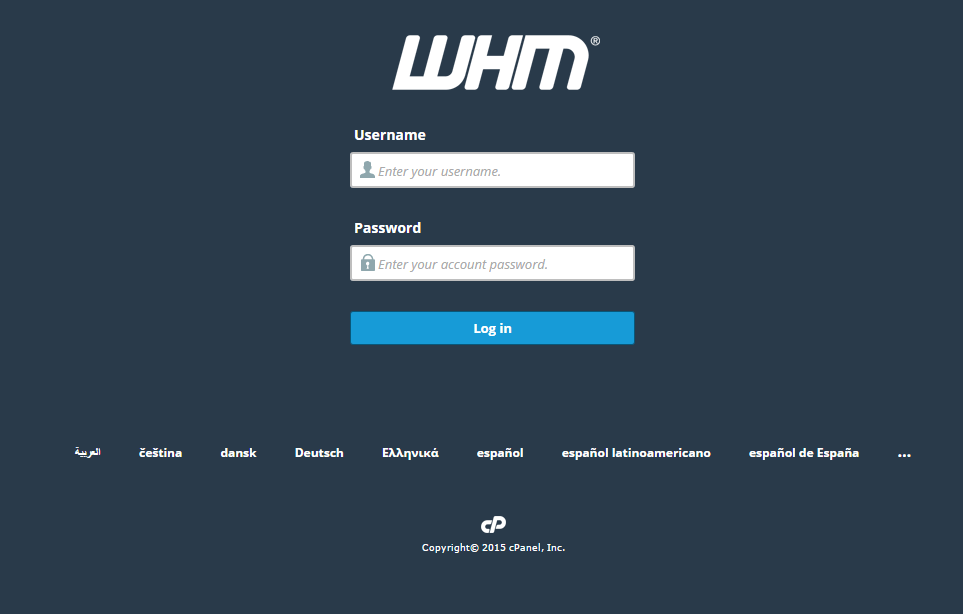
3. Go to your Homepage
Brand certain you're on your WHM Homepage. 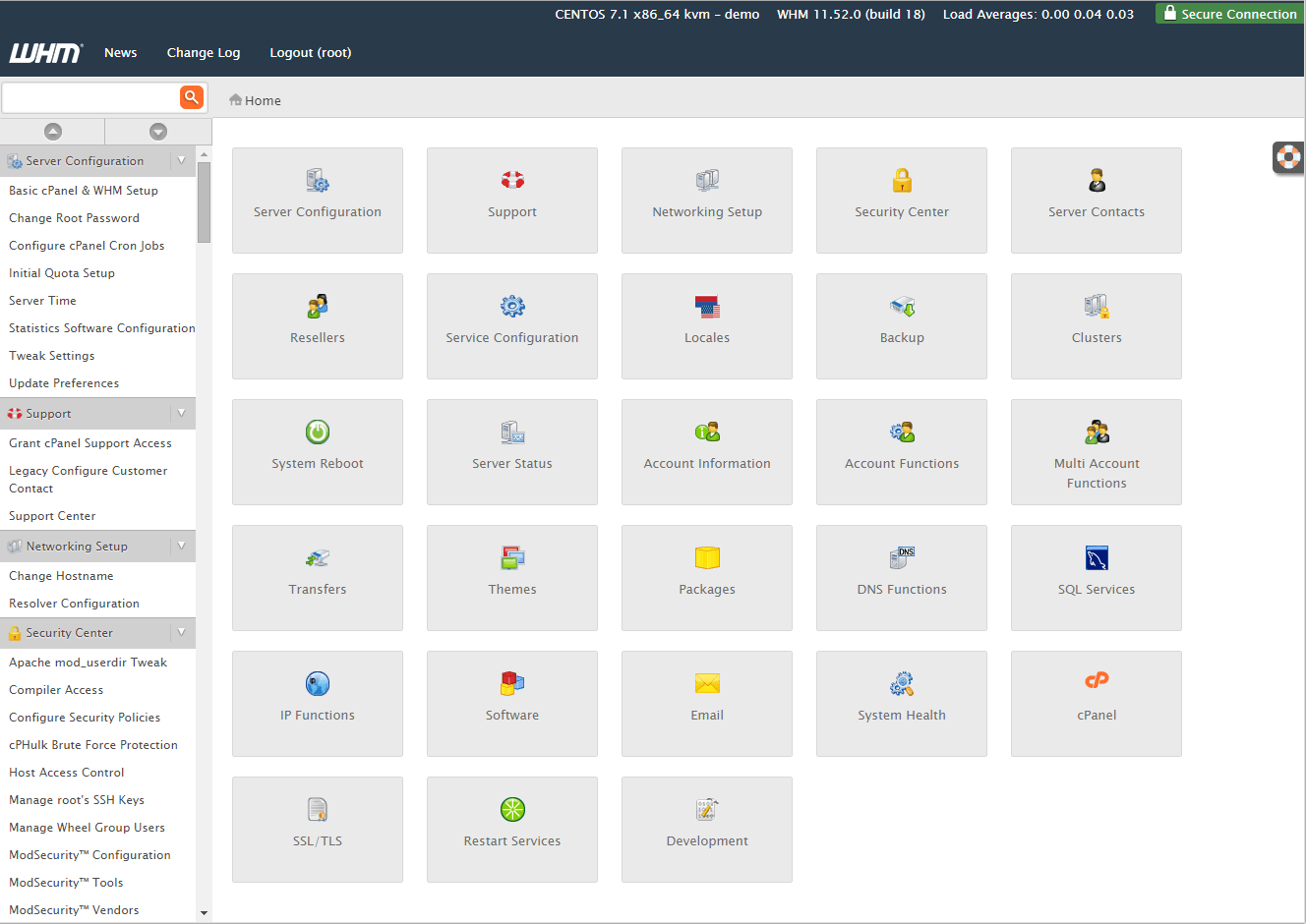
4. Click SSL/TLS
Click the SSL/TLS button.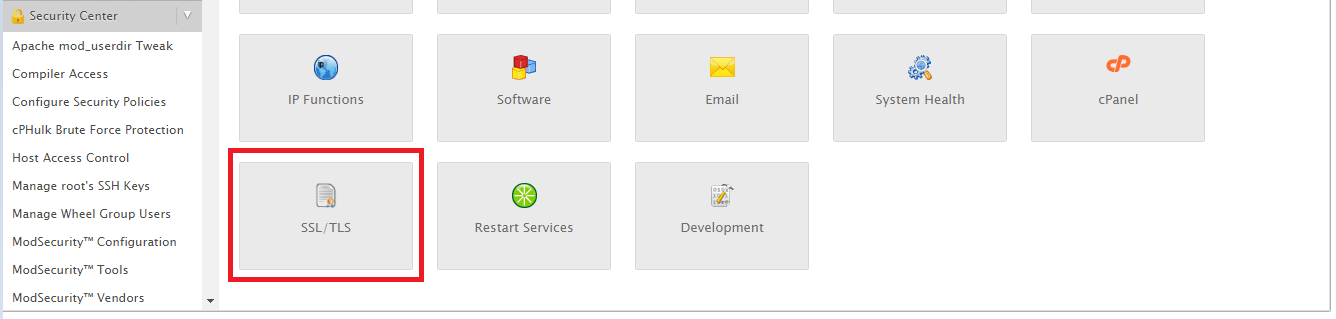
5. Click Install an SSL Document on a Domain
In your SSL/TLS Manager folio, click Install an SSL Certificate on a Domain. 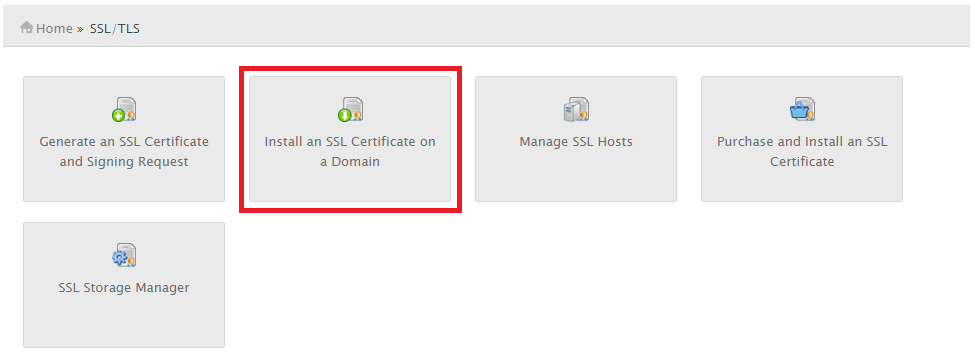
six. Type in your domain name
In the Domain field, type the domain proper noun you want to secure with your SSL Certificate.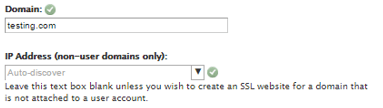
7. Input your Certificate Files
Copy and paste your Document Files into the advisable text box(southward).
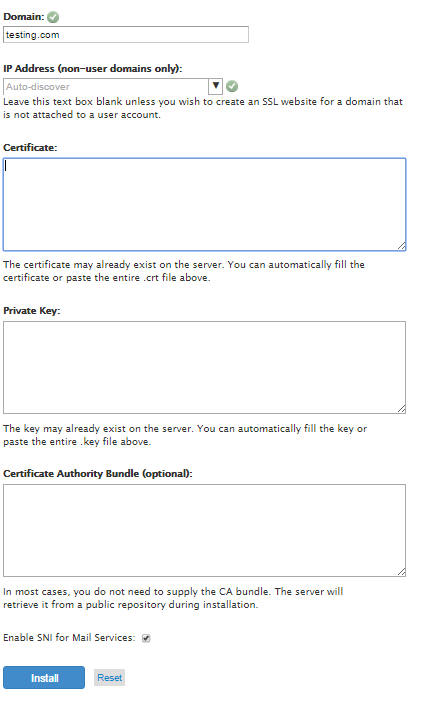
- Certificate – This is your server document that was issued to your domain(s). Note 1: WHM should automatically fetch the Document (CRT) text if y'all previously uploaded the server certificate on the server and entered the correct domain name above. Note 2: If you lot received the certificate in a ZIP file, click "Extract All" and then drag your server certificate into a text editor such as Notepad. This volition allow you to copy all text contents needed including "—–BEGIN CERTIFICATE—–" and "Terminate CERTIFICATE—–".
- Private Central – This is your private fundamental that was created during the generation process. Note 1: WHM should automatically fetch the Individual Fundamental text if y'all previously created the Certificate Signing Request (CSR) in the "Generate an SSL Certificate and Signing Request" section of your SSL/TLS Director and entered the right domain name above. Note 2: If you made the CSR and private key exterior of your WHM account and failed to save the files, you will take problems proceeding and may need to re-outcome the SSL document with a newly created key pair.
- Certificate Dominance Parcel (optional) – These are your intermediate certificates that allow browsers and devices to empathize who issued your trusted certificate. Note 1: WHM automatically fetch the CA Package from a public repository. If you forgot to save these files, download the appropriate CA/Chain Document for your certificate. Note ii : If you have multiple intermediate certificates, paste each of them 1 after another to create the correct certificate chain/path.
viii. Click Install
Once you've inpuuted the Certificate Files into the correct boxes, click Install.
Notation i: You are not required to "Enable SNI for Postal service Services". Server Name Indication (SNI) should only be used if multiple hostnames are being server over HTTPS from the same IP address.
Note two: You or your web host may need to restart the Apache server earlier the document volition work.
Congratulations! Yous've successfully installed your SSL certificate! To check your piece of work, visit the website in your browser at https://yourdomain.tld and view the certificate/site information to see if HTTPS/SSL is working properly. Remember, you may demand to restart your server for changes to take effect.
To cheque your server's configurations more thoroughly, use our SSL Checker Tool or contact our Customer Experience Department for additional assistance.
If the intermediate certificates did not successfully install and configure themselves accordingly using the instructions above, delight reference the instructions beneath on how to manually install them straight in Apache. If you practice non take admission to your Apache server, please contact your spider web host or system administrator for boosted assistance.
one. Locate the Virtual Host File
Locate the Virtual Host File, this can typically be accessed in the /etc/httpd/conf/httpd.conf file. Note: The location and proper name of this file tin change from server to server depending on your configuration. Another popular name for the file is "SSL.conf".
two. View the Virtual Host File
View the Virtual Host configuration with the proper noun & IP address (including port 443).
three. Edit your Virtual Host
Edit your Virtual Host configuration past adding the bolded YourIntermediateCertificate file below:
<VirtualHost 192.168.255.255:443> DocumentRoot /var/www/html2 ServerName www.yourdomain.com SSLEngine on SSLCertificateFile /path/to/your_domain_name.crt SSLCertificateKeyFile /path/to/your_private.cardinal SSLCertificateChainFile /path/to/YourIntermediateCertificate.crt </VirtualHost>
Notation: Make certain you type the correct file path and name where you programme on saving the intermediate certificates. Yous should save these certificates in the aforementioned directory that cPanel has your server certificate and private fundamental stored.
4. Save the changes
Save the configuration file changes.
5. Add the intermediate document
Add the intermediate certificate file to the same directory that cPanel has your server certificate and individual key stored.
half dozen. Restart your server
Restart your Apache server.

Source: https://www.thesslstore.com/knowledgebase/ssl-install/whm-ssl-installation/
Posted by: beasonunth1951.blogspot.com
0 Response to "How To Install Web Server Certificate"
Post a Comment